
Why Email Marketing for Small Business is Your Best Growth Strategy
Running a small business in the competitive US market often feels like shouting into a void. You pour your heart into your products and your budget into social media, only to see engagement drop as algorithms shift. It’s frustrating to feel like you don’t “own” your audience. This is where email marketing for small business becomes your greatest asset. Instead of renting space on a social platform, you’re building a direct line to your customers’ inboxes. In this guide, we’ll show you how to move past the stress of low reach and build a high-converting machine that turns subscribers into loyal fans.
The Value of Email
Why should you prioritize this channel? Email marketing delivers an average ROI of $36 for every $1 spent, making it the highest-ROI digital channel for small businesses. By leveraging a structured conversion funnel, moving leads from top-of-funnel (TOFU) awareness to bottom-of-funnel (BOFU) sales, you create a predictable revenue stream that scales with your business.
How do I grow my email list?
To grow your list effectively, offer a lead magnet such as a discount code, a free guide, or an exclusive webinar. Use high-converting opt-in forms on your website and promote your sign-up link across your Meta Business Suite and LinkedIn Marketing Solutions profiles. Consistent value is the key to maintaining a healthy growth rate.
How to Grow and Convert Your List
1. Proven Email List Building Strategies
Building a list is about quality, not just quantity. You want subscribers who are actually interested in your services.
Create Irresistible Lead Magnets
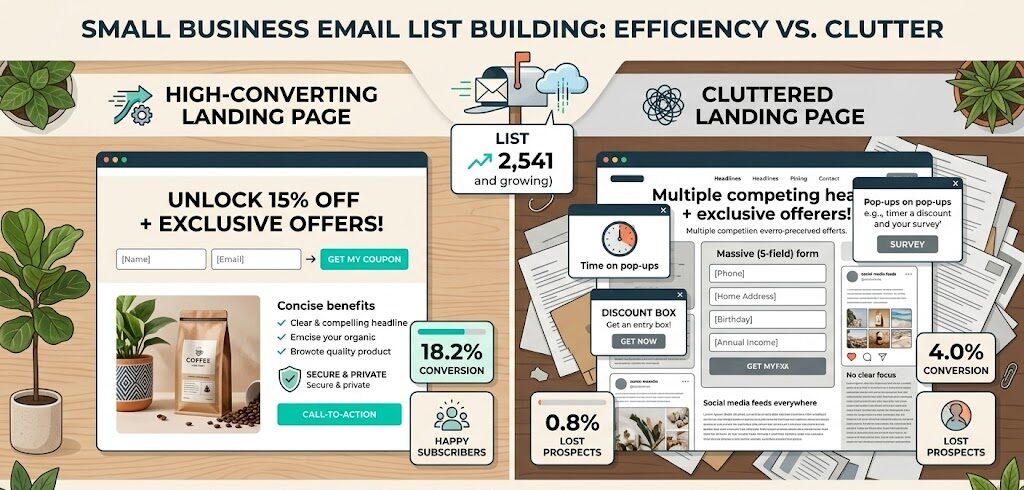
Don’t just ask people to “join our newsletter.” Give them a reason. If you are a service-based business in the US, a Checklist for Success or a State of the Industry Report works wonders. This is the TOFU (Top of Funnel) stage where you exchange value for contact information.
Leverage Your Existing Traffic
Your website is prime real estate. Ensure you have a clear sign-up form on your homepage and at the end of blog posts. If you are already running Google Ads, consider a dedicated landing page specifically for list building to maximize your ad spend.
2. Implementing Email Automation for Small Business
The beauty of modern marketing is that you don’t have to send every email manually. Email automation for small business allows you to set it and forget it while maintaining a personal touch.
The Welcome Sequence
When someone joins your list, they are at their most engaged. An automated 3-part welcome series introduces your brand, delivers the promised lead magnet, and moves them into the MOFU (Middle of Funnel) stage by educating them on how you solve their specific problems.
Abandoned Cart and Re-engagement
For e-commerce or service providers, automated triggers can remind a user of what they left behind. Tools like Mailchimp, ActiveCampaign, or even integrated solutions within HubSpot CRM and Salesforce can track these behaviors and send reminders automatically.
Learn more about integrating these tactics into your broader strategy in our guide to Digital Marketing Lead Generation: A Complete Guide for US Business Owners
3. Advanced Email Segmentation Tips
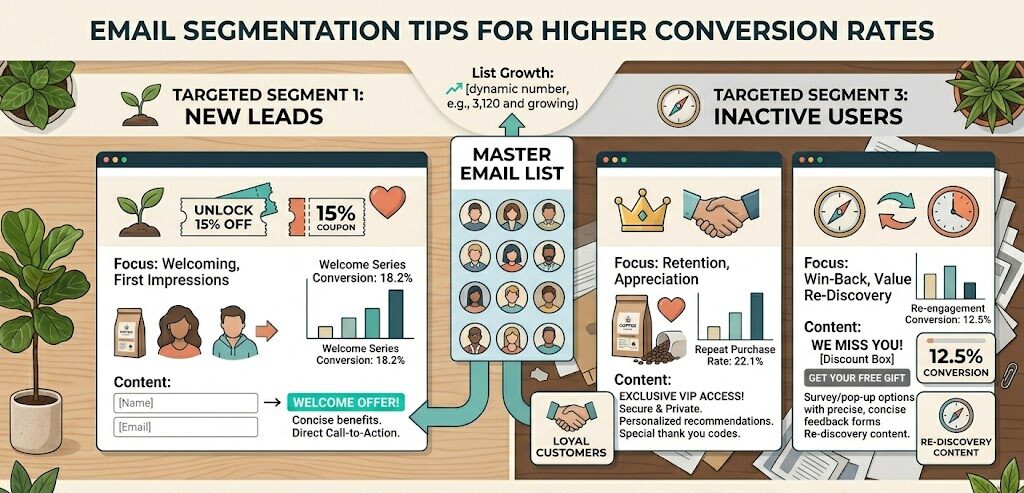
Sending the same email to your entire list is a recipe for high unsubscribe rates. Email segmentation tips usually start with one rule: relevance is king.
- By Behavior: Segment users based on which links they clicked or which pages they visited on your site.
- By Purchase History: Send exclusive “thank you” offers to your VIP customers while sending “come back” discounts to one-time buyers.
- By Geography: For US-based businesses, segmenting by time zone ensures your email hits the inbox at the optimal local time.
4. Tracking Success: Email Open Rate Benchmarks
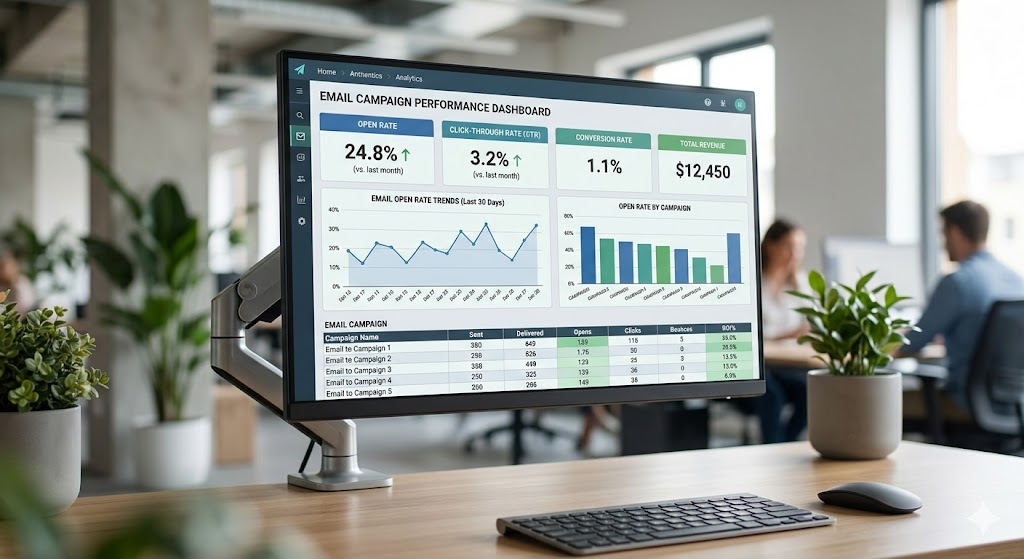
To know if your email marketing for small business is working, you must track the right data. Beyond just opens, look at your conversion rate, how many people actually took the action you requested?
Using a conversion funnel approach helps you see where users are dropping off. If your open rates are high but clicks are low, your content might not be matching the promise of your subject line. If clicks are high but sales are low, your landing page might need optimization.
What is a good email open rate?
A healthy email open rate for small businesses typically falls between 17% and 28%, depending on your specific industry. If your rates are lower, focus on cleaning your list of inactive subscribers and crafting more compelling, personalized subject lines to stand out in a crowded inbox.
How can I improve my email click-through rate?
Improve your click-through rate (CTR) by using a single, clear Call to Action (CTA) button that stands out visually. Segment your list to ensure the content is highly relevant to the recipient, and use A/B testing to determine which button colors and copy styles resonate best with your audience.
Is email marketing still effective in 2026?
Yes, email marketing remains the most effective way to nurture leads because it is a “first-party” data channel. Unlike social media, you own your list and are not subject to sudden algorithm changes, ensuring your message always has a direct path to your customer.
Drive Results with Talatech: Your Local SEO & Marketing Partner
Mastering email marketing for small business doesn’t have to be a solo journey. At Talatech, we specialize in helping US business owners bridge the gap between having a list and generating revenue. We understand the local landscape and the technical nuances of the conversion funnel.
As a team with deep expertise in HubSpot CRM, Mailchimp, and ActiveCampaign integrations, we ensure your marketing stack works in harmony. Whether you need to sync your Google Ads leads or refine your Meta Business Suite retargeting, we are here to help.
- Serving: Proudly serving businesses across the US.
- Expertise: Certified experts in digital growth and lead nurturing.
- Availability: We are currently accepting new clients for 2026.
Ready to turn your email list into a profit center?
Contact Talatech Today or Call Now (940) 597-5872 to speak with a strategist.
Frequently Asked Questions
How often should a small business send emails?
Consistency is better than frequency. For most small businesses, one high-quality weekly newsletter or a bi-weekly update is sufficient to stay top-of-mind without annoying your subscribers.
Which email platform is best for beginners?
Mailchimp and ActiveCampaign are excellent starting points due to their user-friendly interfaces, while HubSpot CRM offers more robust features for businesses looking to scale their sales and marketing in one place.
What is the best time to send emails in the US?
Generally, Tuesday through Thursday mornings (around 10:00 AM local time) see the highest engagement, but this varies by industry. Always test your specific audience.
Available Mon-Fri / 9am-5pm EST | (940) 597-5872 | Contact Us Online | Google Business Profile