
Essential Stages of a Marketing Funnel That Converts
For many US business owners, watching potential customers visit your website only to disappear forever is an incredibly frustrating experience. You’re putting in the work, but the ROI just isn’t showing up in your bank account. It’s stressful to feel like you’re throwing marketing dollars into a void. This guide is designed to end that cycle. We are going to show you exactly how to build a marketing funnel that converts, transforming cold traffic into loyal brand advocates through a structured, data-driven approach.
The Marketing Funnel Quick Reference
- What is TOFU in marketing? Top-of-Funnel content attracts new audiences through educational blog posts, social media, and SEO.
- What is MOFU in marketing? Middle-of-Funnel content engages leads who are evaluating solutions, typically via webinars, case studies, or email sequence
- What is BOFU in marketing? Bottom-of-Funnel content converts prospects into customers using product demos, consultations, or discount offers.
How do you build a marketing funnel that converts in 2026?
Building a high-converting funnel requires a deep understanding of your customer’s journey and the technical tools to track it. You must align your content with the specific needs of each funnel stage while using automation to nurture leads consistently. By focusing on solving problems rather than just selling products, you build the trust necessary for long-term US business growth.
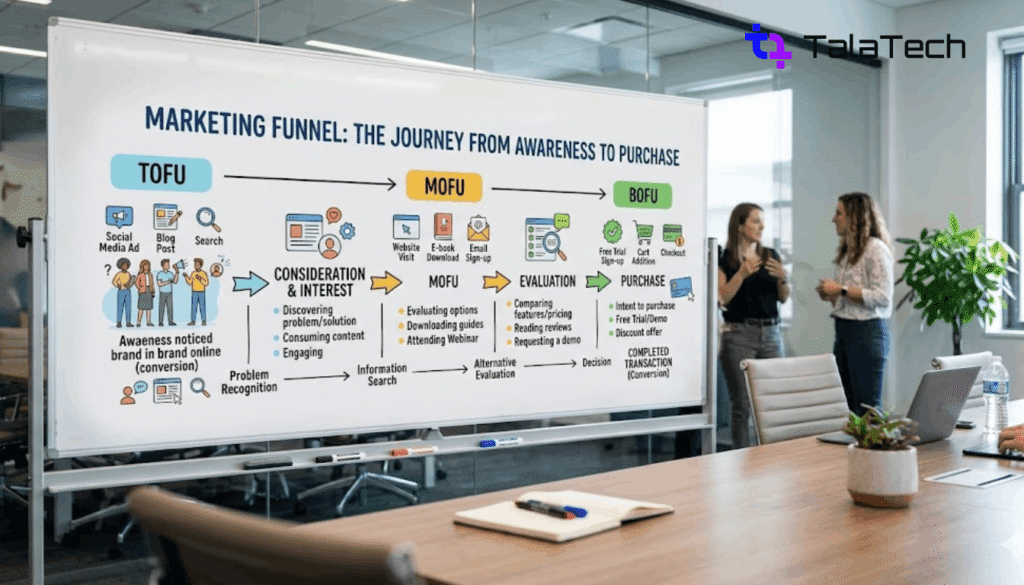
Step 1: Mapping the Marketing Funnel Stages
The foundation of any successful strategy lies in the marketing funnel stages. You cannot treat a first-time visitor the same way you treat someone ready to buy.
- Awareness: Use SEO and social media to answer broad industry questions.
- Consideration: Provide deep-dive guides or comparison charts.
- Decision: Offer the final “nudge” with testimonials or free trials.
Step 2: Optimizing the Top of the Funnel (TOFU)
To attract the right audience, you need high-quality content. This is where your 7 Best Lead Generation Strategies for 2026: Proven Success come into play, ensuring you are pulling in qualified traffic rather than just “vanity” clicks.
Step 3: Nurturing Leads in the Middle (MOFU)
Once you have a lead, the work isn’t over. Tools like HubSpot or ActiveCampaign allow you to automate the nurturing process. By using UTM tracking, you can see which emails are actually driving engagement and adjust your messaging accordingly.
Step 4: Closing the Deal (BOFU)
At the bottom of the funnel, your CTA optimization funnel becomes critical. Whether it’s a “Buy Now” button or a “Schedule a Consult” link, it must be prominent and persuasive. This is the stage where you utilize A/B testing to see which colors, placements, or wording result in the highest sales volume.
Step 5: Post-Purchase Retention
A marketing funnel that converts doesn’t stop at the first sale. Content should shift toward customer success and upsells. Happy customers in the US are your best source of referrals, creating a “flywheel” effect for your brand.
What are the best landing page conversion tips for US businesses?
To increase conversions, your landing page must have a singular focus, a compelling headline, and lightning-fast load times. Use clear, benefit-driven copy and ensure your lead forms are as short as possible to reduce friction. Incorporating social proof, such as local US testimonials, significantly boosts trust and increases the likelihood of a sign-up.
How does a retargeting funnel strategy improve ROI?
A retargeting funnel strategy uses technology like the Meta Pixel to show ads specifically to people who have already interacted with your brand. This keeps your business top-of-mind and reminds prospects of the value you offer, often resulting in a much lower cost-per-acquisition. By segmenting your retargeting ads based on which pages a user visited, you can deliver highly personalized offers that drive conversions
Why is Google Analytics essential for funnel tracking?
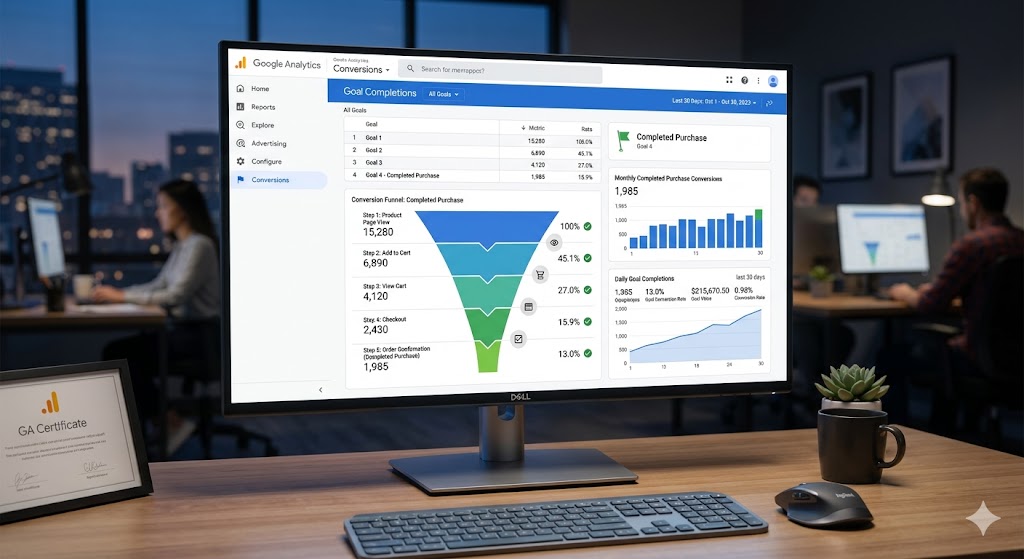
Google Analytics provides the data necessary to see exactly where users are dropping out of your funnel. By setting up conversion goals, you can identify “leaks” in your process and make informed decisions on where to optimize. This technical oversight ensures that your marketing efforts are based on hard facts rather than guesswork, allowing for much better scaling.
Partner with Talatech for a Marketing Funnel That Converts
Navigating the complexities of digital marketing can be overwhelming for US small-to-medium businesses. At Talatech, we specialize in building end-to-end systems that don’t just generate clicks, but generate revenue. As a Google Partner with deep expertise in SEO and lead generation, we provide the technical and creative support you need to dominate your local market.
We are currently available for new client consultations and strategy audits. Let us help you turn your website into a 24/7 sales machine.
Ready to scale?
Call Now (940) 597-5872 or Fill out our Contact Form to start building your custom funnel today.
Available Mon-Fri / 9am-5pm EST | (940) 597-5872 | Contact Us Online | Google Business Profile
FAQ
What is the most important part of a marketing funnel?
The most important part is the transition between stages. If your TOFU content doesn’t naturally lead to your MOFU offer, the funnel breaks.
How long does it take to see results from a new funnel?
While technical setups can be done quickly, it typically takes 30–90 days of data collection and A/B testing to fully optimize a marketing funnel that converts.
Do I need ClickFunnels or ConvertKit?

It depends on your business model. ClickFunnels is great for direct-response sales, while ConvertKit excels at creator-led email marketing. Talatech helps you choose the right stack for your specific needs.